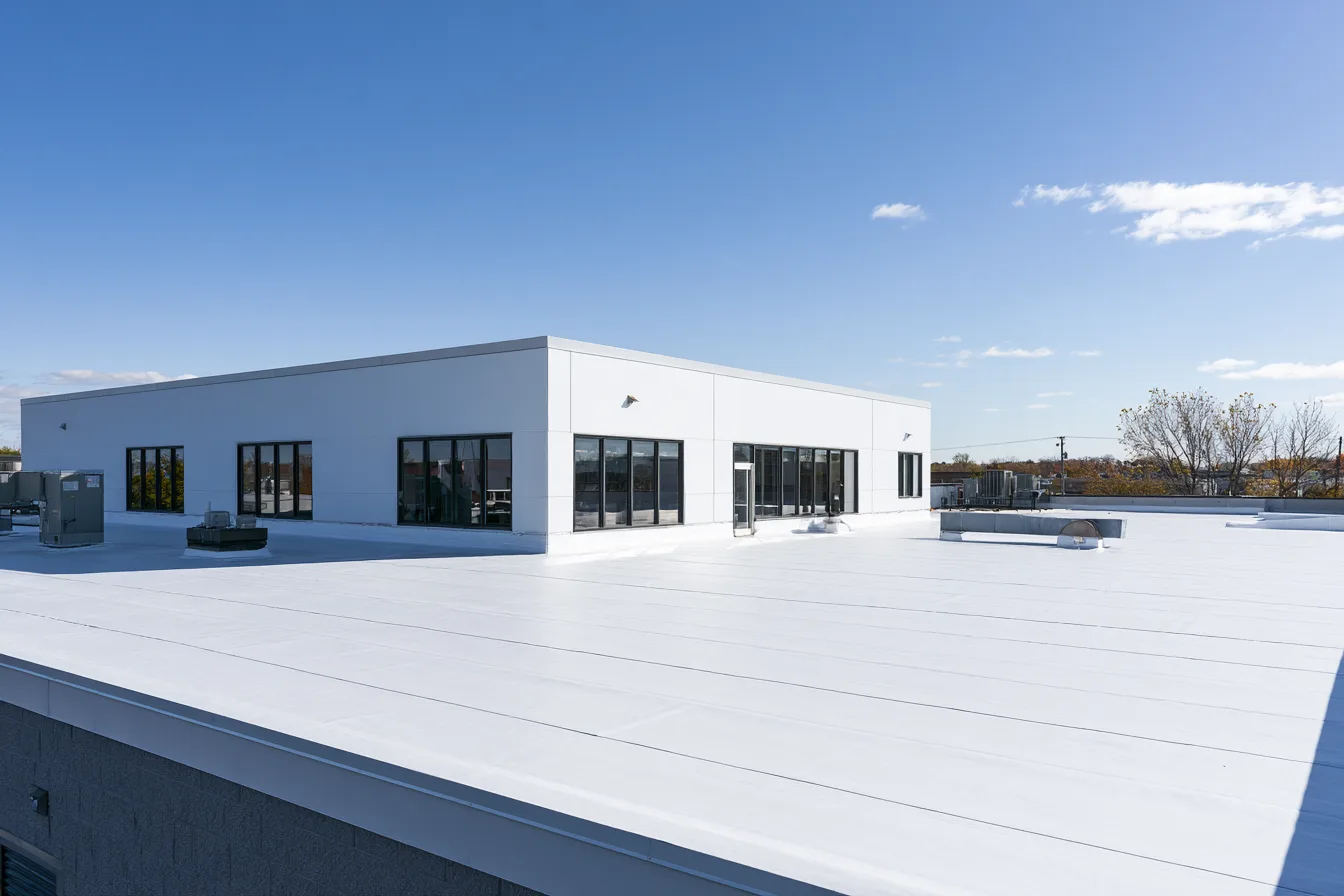
Commercial Roof Coatings in Dallas-Fort Worth, TX
Free inspection. A roofer walks the roof.
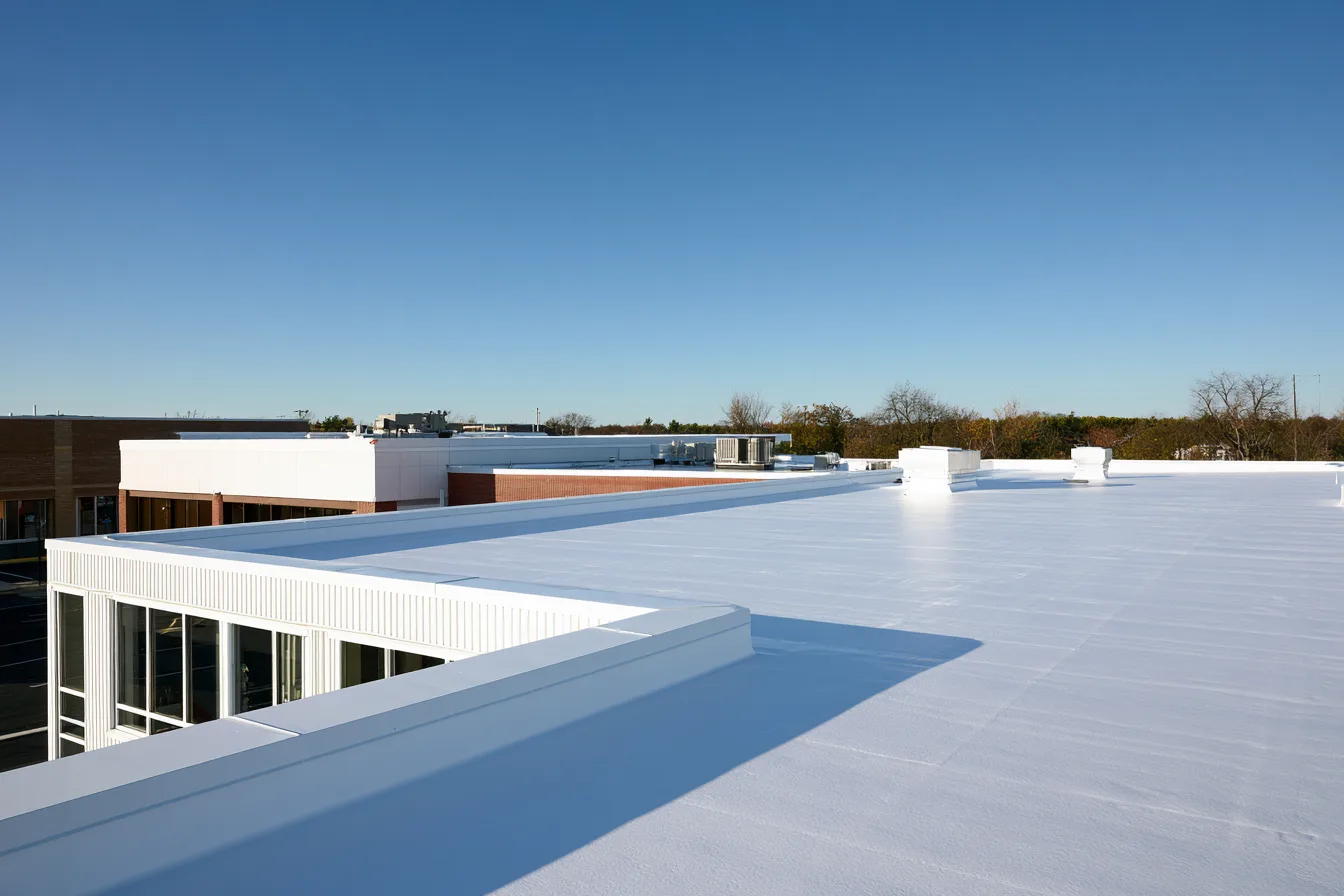
Restoration begins with the roof underneath. Moisture, stability, adhesion and drainage decide whether a coating has a sound place to work.
Qualify the roof before selecting a coating
A coating relies on what it is applied to. The existing roof needs to be stable, suitably dry and compatible with the selected restoration system. Wet insulation or damaged membrane belongs in the repair scope before the finish coat.
Adhesion matters because the coating has to remain connected to its substrate. Preparation, cleaning, test areas and any required primer are part of the selected system. The right product on a poorly prepared surface does not create the intended assembly.
Seams, curbs, penetrations and drainage details need their own repair and reinforcement work as specified. The coating is the final field treatment, not a substitute for resolving an opening or unstable detail.
For a DFW property manager, restoration is a building decision as well as a surface treatment. Occupied rooms, rooftop equipment and access arrangements help define the work, while moisture, adhesion and the underlying roof determine whether the building has a suitable coating candidate.
Three reasons a coating project can change scope
Suitability is a condition to establish, not a selling assumption.
- Moisture in the assembly
Wet areas require identification and appropriate removal or repair. Moisture trapped under a coating remains a roof problem.
- A surface that will not hold adhesion
Contamination, incompatible materials or deteriorated substrate can require different preparation or make restoration unsuitable.
- Drainage that needs correction
Water needs a workable route out. Coating selection alone does not correct a blocked outlet or reshape an inadequate drainage path.
The restoration work before the finished coating
The exact sequence follows the manufacturer’s system and actual roof.
Assess and test
Determine roof condition, moisture extent, compatibility and adhesion requirements.
Repair and prepare
Address wet or damaged areas, clean the surface and detail the seams and interruptions.
Apply the selected system
Primer, reinforcement, application conditions and coverage requirements follow the specific product assembly.
Coating choice is a system decision
Different products bring different substrate and application requirements.
| Question | Why it matters |
|---|---|
| What roof is already installed? | Compatibility and preparation depend on the existing membrane or surface. |
| What moisture is present? | Restoration needs a sound basis below the new coating. |
| How does the roof drain? | Outlets and water paths affect long-term service conditions. |
| What coverage is offered? | Any warranty depends on actual issuer terms, qualified scope and installation requirements. |
Roof Coating FAQs
Does a coating extend every roof’s life?
No. Its usefulness depends on a qualified roof, repairs, preparation, compatible materials and the completed system. Extensive underlying failure can point toward replacement.
Can coating cover old patches?
Existing repairs need compatibility and condition assessment. An old patch may require removal or reworking before a coating can form a dependable connection.
Is restoration always cheaper than replacement?
The required preparation, wet-area replacement and detail work can materially change the price. The useful comparison is between complete scopes for the actual roof.
Discuss the building and its roof.
Start with the building, the existing roof system and the concern. Request a free commercial roof inspection.
(945) 390-2340Free inspection.
A roofer walks the roof.